
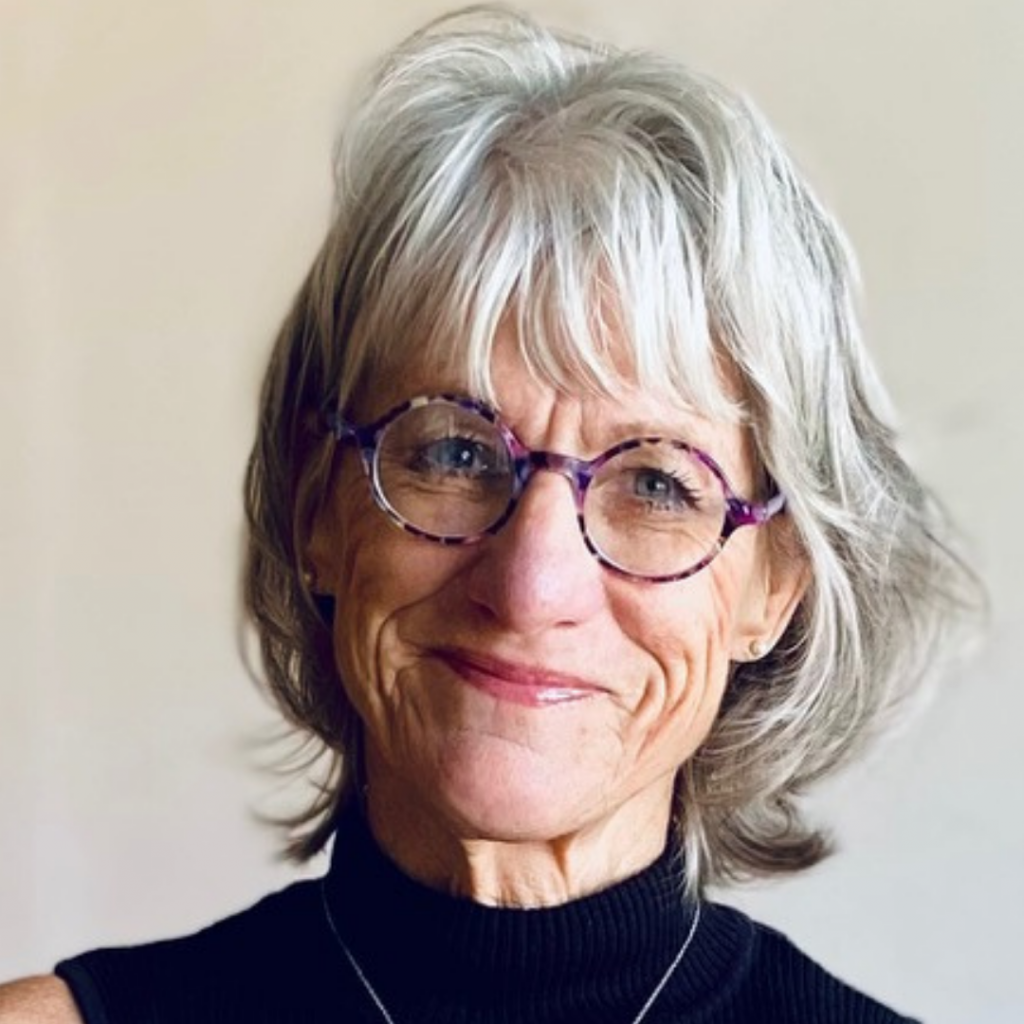
by Stacy Barrows
I was introduced to Physical Therapy as a teenager in my mother’s workplace, and I got to witness healing through the power of movement and support. Despite growing up around therapists and as an athlete, I assumed my patients improved through the right instruction — that good technique, repeated correctly, would prepare them for whatever came next. But when I watched them move, I noticed something: they could replicate the right shape, but couldn’t integrate it into daily life. Their confidence relied on an outside expert’s cue, not their own felt sense, and the harder they tried to get it “right,” the more tension — and the less refinement — they carried.
I was living the same pattern myself. Stiff neck, teeth grinding, impulsivity — I treated the symptoms (ice, a night guard, “better” posture) without understanding where they came from. As a child, I remembered adults complimenting my posture, so I sat up even straighter to impress them. The connection to my symptoms was invisible to me for years. I somehow knew ease was innately mine — I’d just learned to bury it under conditioned habit. Thankfully, research on the brain’s plasticity backs this up: we can recover, adapt, and improve well into later life.[1]
“To correct is incorrect.” — Moshe Feldenkrais
The shift began when I referred patients to a Feldenkrais practitioner and watched them change in ways I hadn’t engineered. It didn’t make sense to me — I wanted a formula I could hand them. But independence isn’t something you can hand over. Real change came from patients discovering more options for themselves, not from being handed the “correct” one. I enrolled in a four-year Feldenkrais training and had to return to the basics, learning like a baby again. My own movement experience became my laboratory, and the hardest part was giving myself permission to not know.
In training, we explored movement through puzzles designed to build ease, not correctness. Straight lines were easy for me; rolling, somersaults, and balance were not — and that discomfort is where I found the fixed habits I’d been holding onto for years. I stopped striving to get it right and let myself explore small, slow movement instead. That shift showed up in my hands, too: as I softened with my clients, I felt them let go of their own resistance.
Movement has always been how I organize my thoughts, feelings, and curiosity — and that’s what I want to invite you to look at: to get curious about your own habits, and about the ways your clients might learn to sense and choose for themselves, instead of waiting for you to fix them.
“Movement is life. Without movement, life would be unthinkable.” — Moshe Feldenkrais
Please watch this three minute experiential video.
Additional Resources:
A series of exercises to do at home
SmartSomaticSolutions.com for Stacy’s classes
Stacy’s blog: Smartroller.net
Feldenkrais quotes referenced: THE POTENT SELF, and THE ELUSIVE OBVIOUS
Gratitude to Biotensegrity for Physiotherapists: Stacy shares her story about deepening her understanding of Biotensegrity
Stacy’s research: although dated, I talk about it in my latest blog
A longtime Yoga practitioner: “As a decades long Yoga practitioner, my first Feldenkrais class felt like the longest, deepest meditation I have ever achieved.” Susan-Student at Santa Monica Yoga
REFERENCES
[1] https://pmc.ncbi.nlm.nih.gov/articles/PMC4026979/
Joining The Hub
There are many benefits to joining The Fascia Hub community. We will be continually revising and updating how we can better support our members. Of course, if you have any ideas or thoughts as to what you would like to see, then we would love to hear from you. Our membership proposition is continually evolving and changing to ensure that we bring you the best from the world of fascia. If there is something you would like to learn more about, please do drop us a line and let us know.